Sleep Disorders
Sleep disorders can interrupt normal sleep patterns and compromise your health. At Redwood Pulmonary Medical Associates, our sleep specialists will evaluate your sleep patterns to determine the source of your sleep problem and make a diagnosis. One of the best tests for detecting a sleep disorder is the overnight sleep study, or polysomnography. A sleep study measures your sleep cycles and stages by recording data from your body as your sleep. Polysomnography is done in a controlled sleep lab and monitored by sleep study technicians.
We’re affiliated with two sleep centers, both fully accredited by the American Academy of Sleep Medicine:
- Sequoia Sleep Disorders Center: This 6-bed sleep lab in Redwood City, CA was established in 1982. It is located within Sequoia Hospital.
- Redwood Sleep Center: Established in 2005, this 4-bed sleep lab in Novato, CA is the only accredited sleep center in Marin County.
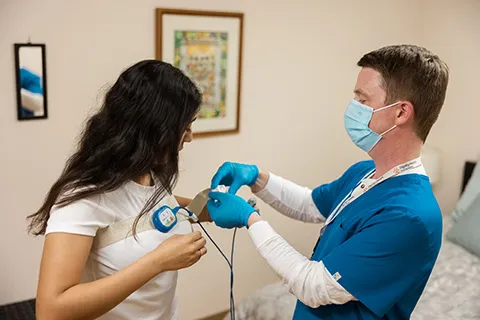
Some patients may be a candidate for a home sleep study, which is typically used to diagnose obstructive sleep apnea. Instead of undergoing polysomnography at a sleep lab, you will be given a portable monitoring device to wear while you sleep at home. Sensors record your airflow and breathing rate. The next day, you will return the device to our center and the recorded information will be evaluated by one of our sleep doctors.
Actigraphy is another method we may use to help evaluate your sleep disorder. Over a 5-day period, you will wear a watch-shaped computer on your wrist to measure your rest and activity cycles. Wrist actigraphy is useful in determining sleep patterns and can therefore help diagnose sleep disorders such as insomnia, narcolepsy, circadian rhythm disorders and nocturnal movement disorders. It is also used to assess the effectiveness of treatments for these disorders.
Following your sleep study or wrist actigraphy, one of our sleep specialists will review and evaluate the results. The doctor will then review the results with you, educate you on what you need to know about your particular sleep disorder and discuss treatment options.
If you think you have a sleep disorder, it is important to seek help from a sleep specialist. To schedule an appointment, call us at (650) 367-5636 in Redwood City or (415) 925-1416 in Marin, or use our online appointment request form.
Learn more about the most common sleep disorders below:
Snoring frequently results from turbulent airflow and narrowing in the nose or throat that creates noise while you breathe during sleep. Although snoring alone typically does not cause any significant medical problems, it may lead to poor sleep, daytime tiredness, embarrassment and strained relationships. Snoring may also be a symptom of sleep apnea, a much more serious and potentially life-threatening sleep disorder that affects over 12 million Americans.
Go back to the top
Obstructive sleep apnea is typically caused by an obstruction in the nose or throat that blocks a person’s breathing airway. During episodes of sleep apnea, you may stop breathing for up to one minute while sleeping, which decreases oxygen levels in the bloodstream and strains the heart. This potentially life-threatening disorder is linked to irregular heartbeat, high blood pressure and heart failure. Symptoms of this condition include loud snoring, pauses in breathing and daytime sleepiness. In most cases, our sleep doctors can treat obstructive sleep apnea with a breathing assist device at night (CPAP) or recommend alternative treatments.
Go back to the top
If you have narcolepsy, you may find yourself suddenly and unexpectedly falling asleep for brief periods of time during the day, even if you’ve had a full night’s sleep. Symptoms include cataplexy, which is a sudden loss of muscle function, sleep paralysis and frightening hallucinations. Fortunately, the symptoms of narcolepsy may be managed with lifestyle changes and prescription medication.
Go back to the top
If you suffer from insomnia, you may have trouble falling asleep or staying asleep at night, or you might wake up too early in the morning. Insomnia may be caused by a medical problem such as hormonal changes or thyroid conditions, or a psychiatric problem such as anxiety or depression. Insomnia treatments usually include lifestyle changes, medications, therapy or a combination of treatments.
Go back to the top
Circadian rhythm sleep disorder is a condition in which a person’s sleep/wake schedule is out of synch with the body's biological "clock," or 24-hour circadian rhythms. It is common for circadian rhythm sleep disorder to occur in those who work rotating or night shifts or who are suffering from jet lag. This mismatch may make it hard to fall asleep or stay asleep at night (insomnia) and stay awake during the day (narcolepsy). Circadian rhythm sleep disorder can cause fatigue, irritability and indigestion.
Go back to the top
Restless legs syndrome (RLS) is an uncomfortable sleep disorder that causes cramping, burning and itching in the legs while resting or sitting for long periods of time. RLS can be so painful that it causes you to lose sleep, resulting in daytime drowsiness and insomnia. It is most common in people aged 50 and older. The symptoms of RLS may be relieved with lifestyle changes and prescription medication.
Go back to the top
People suffering from periodic limb movements in sleep (PLMS) experience involuntary and repetitive leg-jerking. These movements can happen throughout sleep and be a nuisance to your sleeping partner. Like RLS, PLMS can cause daytime sleepiness and insomnia. PLMS may be treated with medications and specialized therapy before bedtime to help alleviate nighttime leg-jerking.
REM sleep behavior disorder (RBD) occurs when you act out vivid dreams during rapid eye movement (REM) sleep. These dreams are often filled with intense, violent action, including shouting, kicking, punching, flailing, grabbing and jumping from bed. It is normally easy to wake a person with RBD who is acting out a dream. RBD most often occurs in men over the age of 50.
Go back to the top
Please visit our patient education library to learn more about sleep disorders and treatments.
We have two convenient offices to serve you. Call us at (650) 367-5636 in Redwood City or (415) 925-1416 in Greenbrae (Marin County), or use our online appointment request form.
Sleep Disorders
Sleep disorders can interrupt normal sleep patterns and compromise your health. At Redwood Pulmonary Medical Associates, our sleep specialists will evaluate your sleep patterns to determine the source of your sleep problem and make a diagnosis. One of the best tests for detecting a sleep disorder is the overnight sleep study, or polysomnography. A sleep study measures your sleep cycles and stages by recording data from your body as your sleep. Polysomnography is done in a controlled sleep lab and monitored by sleep study technicians.
We’re affiliated with two sleep centers, both fully accredited by the American Academy of Sleep Medicine:
- Sequoia Sleep Disorders Center: This 6-bed sleep lab in Redwood City, CA was established in 1982. It is located within Sequoia Hospital.
- Redwood Sleep Center: Established in 2005, this 4-bed sleep lab in Novato, CA is the only accredited sleep center in Marin County.
Some patients may be a candidate for a home sleep study, which is typically used to diagnose obstructive sleep apnea. Instead of undergoing polysomnography at a sleep lab, you will be given a portable monitoring device to wear while you sleep at home. Sensors record your airflow and breathing rate. The next day, you will return the device to our center and the recorded information will be evaluated by one of our sleep doctors.
Actigraphy is another method we may use to help evaluate your sleep disorder. Over a 5-day period, you will wear a watch-shaped computer on your wrist to measure your rest and activity cycles. Wrist actigraphy is useful in determining sleep patterns and can therefore help diagnose sleep disorders such as insomnia, narcolepsy, circadian rhythm disorders and nocturnal movement disorders. It is also used to assess the effectiveness of treatments for these disorders.
Following your sleep study or wrist actigraphy, one of our sleep specialists will review and evaluate the results. The doctor will then review the results with you, educate you on what you need to know about your particular sleep disorder and discuss treatment options.
If you think you have a sleep disorder, it is important to seek help from a sleep specialist. To schedule an appointment, call us at (650) 367-5636 in Redwood City or (415) 925-1416 in Marin, or use our online appointment request form.
Learn more about the most common sleep disorders below:
Snoring frequently results from turbulent airflow and narrowing in the nose or throat that creates noise while you breathe during sleep. Although snoring alone typically does not cause any significant medical problems, it may lead to poor sleep, daytime tiredness, embarrassment and strained relationships. Snoring may also be a symptom of sleep apnea, a much more serious and potentially life-threatening sleep disorder that affects over 12 million Americans.
Go back to the top
Obstructive sleep apnea is typically caused by an obstruction in the nose or throat that blocks a person’s breathing airway. During episodes of sleep apnea, you may stop breathing for up to one minute while sleeping, which decreases oxygen levels in the bloodstream and strains the heart. This potentially life-threatening disorder is linked to irregular heartbeat, high blood pressure and heart failure. Symptoms of this condition include loud snoring, pauses in breathing and daytime sleepiness. In most cases, our sleep doctors can treat obstructive sleep apnea with a breathing assist device at night (CPAP) or recommend alternative treatments.
Go back to the top
If you have narcolepsy, you may find yourself suddenly and unexpectedly falling asleep for brief periods of time during the day, even if you’ve had a full night’s sleep. Symptoms include cataplexy, which is a sudden loss of muscle function, sleep paralysis and frightening hallucinations. Fortunately, the symptoms of narcolepsy may be managed with lifestyle changes and prescription medication.
Go back to the top
If you suffer from insomnia, you may have trouble falling asleep or staying asleep at night, or you might wake up too early in the morning. Insomnia may be caused by a medical problem such as hormonal changes or thyroid conditions, or a psychiatric problem such as anxiety or depression. Insomnia treatments usually include lifestyle changes, medications, therapy or a combination of treatments.
Go back to the top
Circadian rhythm sleep disorder is a condition in which a person’s sleep/wake schedule is out of synch with the body's biological "clock," or 24-hour circadian rhythms. It is common for circadian rhythm sleep disorder to occur in those who work rotating or night shifts or who are suffering from jet lag. This mismatch may make it hard to fall asleep or stay asleep at night (insomnia) and stay awake during the day (narcolepsy). Circadian rhythm sleep disorder can cause fatigue, irritability and indigestion.
Go back to the top
Restless legs syndrome (RLS) is an uncomfortable sleep disorder that causes cramping, burning and itching in the legs while resting or sitting for long periods of time. RLS can be so painful that it causes you to lose sleep, resulting in daytime drowsiness and insomnia. It is most common in people aged 50 and older. The symptoms of RLS may be relieved with lifestyle changes and prescription medication.
Go back to the top
People suffering from periodic limb movements in sleep (PLMS) experience involuntary and repetitive leg-jerking. These movements can happen throughout sleep and be a nuisance to your sleeping partner. Like RLS, PLMS can cause daytime sleepiness and insomnia. PLMS may be treated with medications and specialized therapy before bedtime to help alleviate nighttime leg-jerking.
REM sleep behavior disorder (RBD) occurs when you act out vivid dreams during rapid eye movement (REM) sleep. These dreams are often filled with intense, violent action, including shouting, kicking, punching, flailing, grabbing and jumping from bed. It is normally easy to wake a person with RBD who is acting out a dream. RBD most often occurs in men over the age of 50.
Go back to the top
Please visit our patient education library to learn more about sleep disorders and treatments.
We have two convenient offices to serve you. Call us at (650) 367-5636 in Redwood City or (415) 925-1416 in Greenbrae (Marin County), or use our online appointment request form.